The years between three and six are a period of very rapid development. During these years, children quickly expand their vocabulary, make up pretend play, and begin to recognise and manage their emotions; they run, climb and learn to use scissors and pencils. That is why early childhood education is not just “preparation for school” but a process in which all areas of a child’s development are supported together.
The 360 Early Childhood Education Programme, which we deliver for children aged 36–72 months, was designed with this holistic view. The programme is an eclectic, play-based curriculum that brings together the strengths of successful models in Türkiye and around the world and is built on the curriculum of the MEB (Turkish Ministry of National Education). Our aim is to raise children who are curious, who investigate, who create and who turn their experiences into life skills. We believe every child deserves to begin their education in an environment where they can explore happily and freely and feel safe.
Why is play at the heart of learning?
For adults, play often means “rest”; for young children, it is learning itself. A child stacking blocks is working with balance and numbers; a child playing house is working with roles and emotions; a child digging a channel in the sand is working with cause and effect. Play keeps a child’s curiosity alive and lets them try out a new skill effortlessly and of their own accord. The play-based structure of the 360 Programme rests on this fact: children make sense of the world through play, and it is also through play that they come to know and express themselves.
The five Learning Child Modules
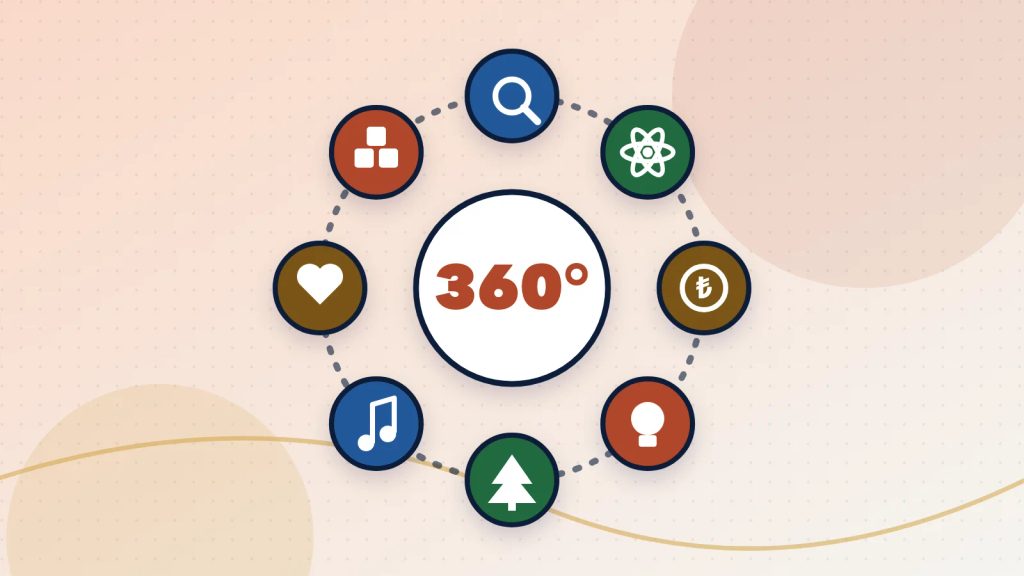
The programme is built on five Learning Child Modules. Through these modules, we aim to prepare our students for real life.
1. Science, Discovery and Curiosity
In this module, children learn to ask questions, investigate and come up with solutions. With STEAM-based materials and games, they observe, make predictions, test and draw conclusions. As preparation for coding, they work on classification, patterns and reasoning; in mathematical thinking activities, they practise comparing, rhythm, measuring and making connections. They make observations about the seasons, living things and the environment; the module also includes individual and group work in discovery centres and learning stations, as well as mini research projects and presentations using the project approach. There are four programmes in the module:
- GEMS (Great Explorations in Math and Science): Makes science and maths fun and discovery-based for children, supporting the skills of asking questions, observing, solving problems and establishing cause-and-effect relationships. GEMS is a family of programmes developed at the Lawrence Hall of Science, part of the University of California, Berkeley, in the USA.
- Financial Literacy: Getting to know the concepts of money, needs and wants, sharing and saving through play; noticing how money is used in everyday life and developing an awareness of responsible consumption.
- First Step into Entrepreneurship: Being curious, noticing a need, coming up with a solution, trying it out, improving it and sharing the value created.
- Forest School: A love of nature, motor skills and physical health; problem-solving, sharing and teamwork outdoors; active use of the senses of touch, sight, smell and hearing.
2. Digital Awareness
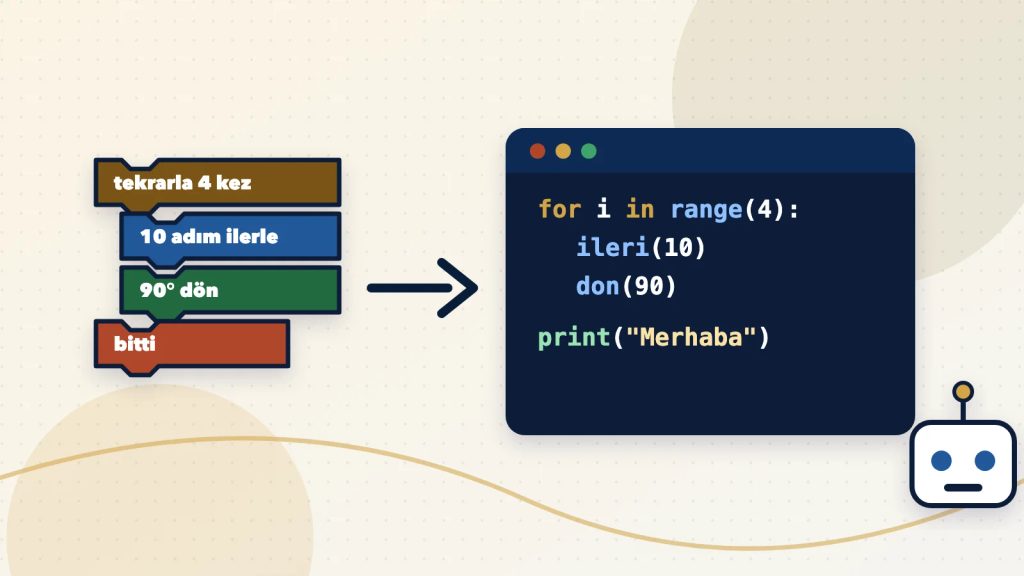
Technology is already part of our children’s world. This module aims to help them build a controlled, conscious and purposeful relationship with it. Children gain awareness of age-appropriate technology use and healthy screen time. Robotics and coding activities are carried out under teacher guidance, using concrete materials. Artificial intelligence applications are used safely and in line with pedagogical principles, taking children’s developmental characteristics into account; children begin to get to know AI and to develop habits of correct and safe use.
3. Holistic Development and Skills
Visual arts, creative drama, music and dance are interwoven with Turkish, maths and social-emotional development activities. Guided by specialist teachers of practical subjects, children explore, experiment and create through free and unstructured play, developing balance, coordination and body awareness. The programmes in this module are:
- Singapore Maths: Teaching skills such as number sense, addition, subtraction, ordering and comparing through concrete materials and games. The method is generally known for progressing from concrete objects to pictures and from there to symbols.
- Play-Based Education: Building on the fact that children learn more easily in natural, spontaneous settings, we offer rich learning environments that draw on their prior knowledge and continually develop their comprehension skills.
- Leadership Skills Development: Daily tasks that encourage taking responsibility, team games that strengthen cooperation, problem-solving activities, self-expression work and classroom projects that develop empathy.
- Art and Sport: Every student learns to play an instrument and takes up at least one art form. The aim is not to train artists or athletes but for art and sport to find a lasting place in life; children whose interests and talents become evident are guided towards special extracurricular programmes.
4. Well-being
This module is the foundation of the preschool years. In a classroom culture where values such as kindness, empathy, respect and responsibility are embraced and everyone feels valued, children’s emotional management and self-regulation skills grow stronger; sharing, cooperating and waiting their turn become a natural part of daily life. The Life Skills Education Programme develops skills such as responsibility, cooperation, problem-solving and self-awareness. The programme is grounded in the Montessori approach’s individual discovery and practical life activities and in the HighScope approach’s principles of child-centred learning and discovery through experience.
5. Language
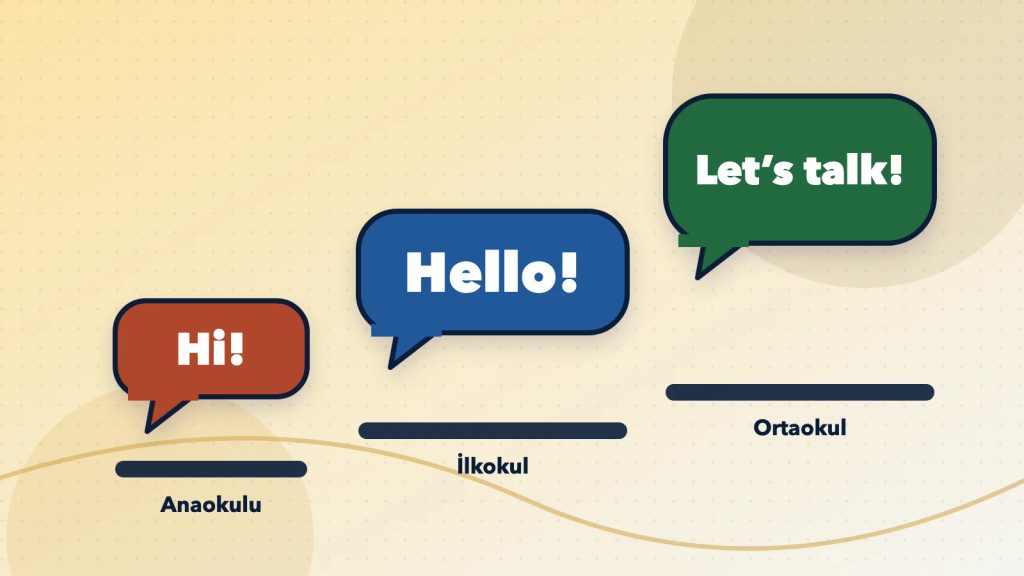
This module covers mother-tongue development, world languages and early literacy. Turkish is strengthened through drama, stories and activities that enrich vocabulary, while phonological awareness work introduces the building blocks of language. English is acquired naturally through the CLIL approach (Content and Language Integrated Learning), within maths, science, art and movement activities, and through games and daily routines.
In kindergarten we support English within the natural flow of the day through a half-day English approach. Through the Daily Language project, implemented from age 3, children learn the language by living it in everyday conversation, accompanied by Turkish and international English teachers. We aim for a student who completes the early childhood stage to reach pre-A1 or A1 level. From age 5, activities that help children feel sounds, draw lines in the right direction, write and colour within limited spaces and hold a pencil correctly lay the groundwork for writing in Grade 1.
A week at Güneşli: routines and corners
For young children, predictable routines nurture a sense of security; a child who knows what is going to happen is more willing to try new things. In our kindergarten, each day of the week has a theme:
- Monday: Toy Day
- Tuesday: Surprise Day
- Wednesday: Book Day
- Thursday: Show and Tell Day
- Friday: Responsibility Day
These routines help our children develop regular habits and strengthen their social skills. The drama play, book, art, music, and science and research corners in our classrooms make discovery possible in different areas. With our colourful classrooms, our dance and movement studio and our child-sized dining hall, we have arranged every corner with this age group in mind.
How do we monitor development?
Assessment is carried out to get to know the child, not to test them. In this process we use natural, child-focused methods such as observation forms, development and skill acquisition reports, anecdotal records and family meetings.
- At portfolio meetings held twice a year, children themselves show and tell their families what they have been doing at school.
- Our teachers report on social, emotional, cognitive and physical development twice a year, for the first and second terms.
- Social and emotional development is monitored at set intervals with verbal and printed inventories, and feedback is given to parents.
- Our Psychological Counselling and Guidance (PDR, school counselling) unit applies a gradual transition during the settling-in period and keeps a development file for each child.
Come along with your child
Our programme for the 3-year-old age group is now open. A good way to get to know a kindergarten is to tour the classrooms with your child and meet the teachers. Campus visits are available on weekdays 08:00–18:00 and on Saturdays 09:00–13:00. You can fill in the enquiry form on our website, call us on 0553 929 29 95 or 444 2 655, or message us on WhatsApp at 0553 929 29 95.