Starting school, joining a new group of friends, learning to read, stepping into adolescence, preparing for the LGS (Türkiye’s national high-school entrance exam)… Childhood and early adolescence are full of one transition after another. Every child goes through these transitions at their own pace and in their own way, sometimes with joy and sometimes with anxiety.
At Özel Lider Güneşli Koleji, our psychological counselling and guidance work is carried out with a shared understanding and an ethical approach that takes into account each student’s developmental needs on their journey of growing up. Alongside work that supports the development of all our students, we are also by their side when they struggle and need support, with our compassionate way of communicating, our solution-focused perspective and our professional expertise.
What does school guidance cover?
From time to time, parents ask us: “Do you only go to the counsellor when there is a problem?” The answer is no. The Guidance and Psychological Counselling Services Regulation published in 2020 by the MEB (Turkish Ministry of National Education) also defines school guidance not as a service focused only on problems, but as a developmental and preventive service that covers all students. These services address students’ social-emotional, academic and career development together, and are offered in various forms such as individual and group sessions, classroom guidance activities, psychoeducation programmes, seminars, workshops and publications.
School guidance is not a clinical diagnosis and treatment service. The school counsellor gets to know, follows and supports the student; when a more comprehensive assessment is needed, a referral can be made, together with the family, to an appropriate specialist or to a Guidance and Research Centre (RAM, a state educational assessment centre).
The five foundations of our approach
- Student-centred and development-focused: We place the student’s development and learning needs at the centre and provide the knowledge and experience they need to fulfil their potential. We run an original, enriched PDR (psychological counselling and guidance, i.e. school counselling) programme that follows current developments and international research; our guidance lesson content and extracurricular programmes are part of this programme.
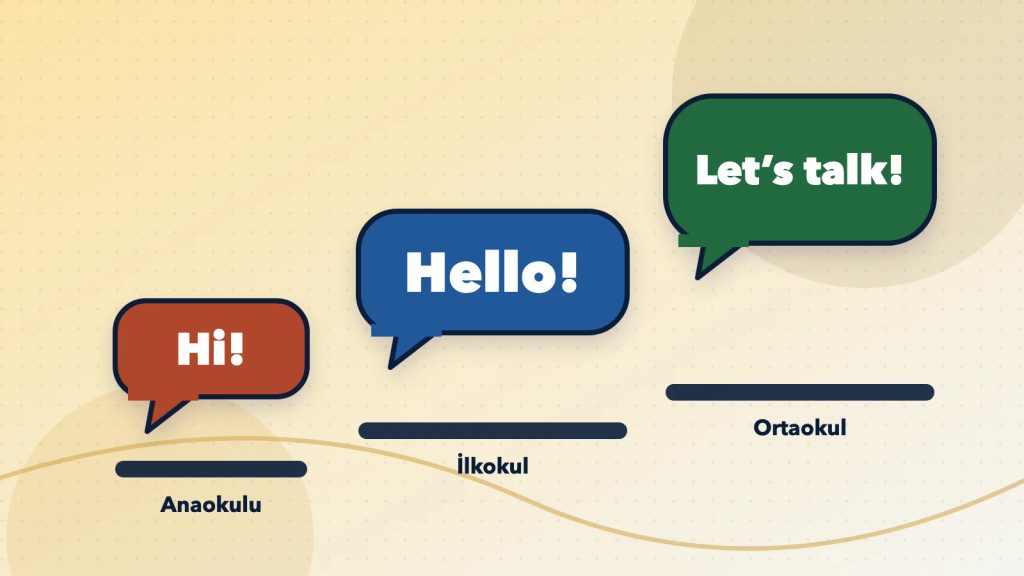
- A planned, shared way of working: Our guidance work follows a planned, shared schedule at every school level, so that every student, from kindergarten to middle school, receives the same professional service.
- Individual planning and follow-up: From the moment a student starts school, their development is assessed through various tests, inventories and observations, and planning is done in line with their abilities, interests and needs.
- Working together with families: We know how important the family is in every child’s development, and we share updates on development at regular intervals. We support our families through our parent education sessions and publications.
- An ethical and professional approach: Our specialist school counsellors carry out their work objectively and in line with the ethical codes they are bound by.
The first step of personalised learning: getting to know the student
Our personalised learning model is based on the principle that “every child is different and learns differently”, and it begins with getting to know the student. A student’s cognitive, physical, social and emotional development is identified by our Psychological Counselling and Guidance unit through tests and inventories based on scientific evidence, and the results are shared with our teachers and parents.
- In primary school, our PDR unit and the class teacher follow the child’s learning style, attention development and social adjustment through regular observation; development notes and observation records are kept for each student.
- In middle school, this stage continues with individual guidance to discover strengths and set academic goals. A personal development file is created for each student and the process is shared transparently with the family.
- In talent discovery, performance in art, sport, music and robotics workshops is observed; through a joint assessment by our PDR unit and subject teachers, the areas a student has an aptitude for are identified and reported to the family.
Our focus areas at each school stage
Kindergarten: a safe start
Settling in at school is one of the most sensitive issues of the preschool years. Because every child settles in differently, a gradual transition is applied under the leadership of our PDR unit; in the first days, the child is helped to feel safe through cooperation with parents. Our focus areas at this stage include orientation, individual development assessment, friendships, developing responsibility, expressing and regulating emotions, bullying prevention, self-care skills, privacy education, attention and thinking skills, and preparation for primary school. A development file is kept for each student. Development is shared with parents through portfolio meetings held twice a year, end-of-term development reports, and feedback given at set intervals using verbal and printed inventories.
Primary school: from settling in to learning skills
In primary school, our PDR unit plays an active role at every stage of the process, from settling in at school to attention development and from friendships to emotional regulation. The aim is for the child to feel safe and develop healthily. Focus areas include study skills, safe technology use, life and careers, developing responsibility, expressing and regulating emotions, bullying prevention, privacy education, attention and thinking skills, mindfulness and preparation for middle school.
Middle school: identity, goals and exams
The middle-school years are a time when adolescence begins, academic expectations rise and the first questions about the future are asked. At this stage, our main focus areas are managing exam anxiety, friendships, family communication and career guidance. Goal setting, study skills, exam techniques, managing anxiety and stress, anger management, adolescence, safe technology use, career awareness and high-school choice counselling are also among our focus areas.
Our guidance unit stands by students throughout LGS preparation; progress is shared with students and parents through regular exams and individual development tracking. Through the digital student tracking system, parents can follow exam results, homework and PDR feedback on the mobile app.
How can you help as a parent?
Guidance grows stronger when it goes hand in hand with the family. Here are some suggestions we have gathered from general practice in school counselling:
- Share changes: Changes at home such as moving house, a new sibling, a loss, a separation or a health problem can affect a child’s behaviour at school. Sharing this information makes it easier for teachers and the counsellor to understand your child correctly.
- Get in touch early: If a noticeable change in sleep or appetite, reluctance to go to school, withdrawal or frequent angry outbursts have been going on for a few weeks, it is always easier to talk before things grow.
- Listen rather than rushing to fix things: When children talk about their feelings, they often want to be understood rather than given a solution. A sentence such as “It looks like that really upset you” opens more doors than a long lecture.
- Don’t present guidance as a punishment: Saying “There’s someone who would like to talk with you and can help you” instead of “I’m going to send you to the counsellor” helps a child approach support positively.
- Keep a balance during exam periods: In middle school, sleep, exercise and social life matter just as much as expectations of success. Talking about effort rather than results helps reduce anxiety.
- Attend parent education sessions: Our school’s parent education sessions also offer an opportunity to meet other families with similar questions.
Trust and confidentiality
The counselling relationship is built on trust. Under professional ethics, what a student shares with the counsellor is kept confidential; the main exception to this principle is when the safety of the child or someone else is at risk. In such cases, we work together with the family and, where necessary, with the relevant authorities. The fact that our school counsellors act objectively and are bound by ethical rules is a safeguard for both our students and our families.
We look forward to meeting you
If you would like to get to know our approach to guidance and our school stages more closely, we look forward to welcoming you to our school. Campus visits are available on weekdays 08:00–18:00 and on Saturdays 09:00–13:00. You can fill in the enquiry form on our website, call us on 0553 929 29 95 or 444 2 655, or message us on WhatsApp at 0553 929 29 95.